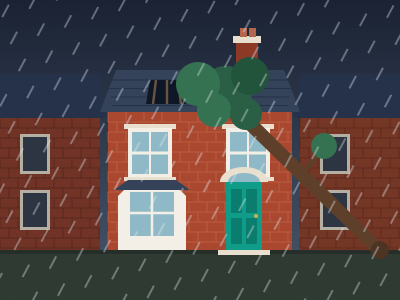
Slipped tiles, a collapsed chimney, a fallen tree, then rain pouring in through the gap. Storm claims are refused more often than most, so it pays to get yours right from the start.
Strong winds, heavy rain, hail and snow can all cause damage. The first damage is often only the start, because the rain that gets in afterwards can do even more.
Lifted or slipped tiles, damaged flashing, flat roofs torn open, and chimneys or pots brought down.
A tree or large branch landing on the roof, a wall, a car or an extension.
Garden walls, garages, sheds and conservatories damaged or blown down.
Water coming through damaged roofs and windows, soaking ceilings, loft insulation and contents.
Regulator figures showed most home storm claims made in 2024 didn't end in a payout. Many of those refusals can be challenged.
Many insurers only accept a storm if the wind reached a certain speed, often gusts of around 55mph, or there was very heavy rain, hail or snow. A weather station miles away recording slightly less can be used to refuse a claim. We look at all the weather evidence, not just one reading.
This is the most common argument. Insurers say the storm only showed up a roof or wall that was already failing. Older buildings aren't excluded from cover, and we challenge this where the evidence points to the storm.
Many policies don't cover fences, gates and hedges for storm damage. We check exactly what yours says.
You're expected to take reasonable steps to stop more damage, such as a tarpaulin over a hole in the roof. Insurers may refuse later damage if nothing was done. Keep records of what you did.
If a neighbour's tree falls on your home, you normally claim on your own policy. The cost of removing a fallen tree may only be covered if it damaged insured property.
On a storm claim your insurer may send a loss adjuster or a surveyor. After a big storm they can be dealing with thousands of claims. They work for the insurer. A loss assessor works for you, gathers the weather and building evidence, and challenges refusals that don't stand up.
I spent 10 years adjusting claims for insurers, and 36 years in claims in all, so I know how a storm claim is looked at from the other side of the table. Our review of your claim is free and without obligation. If we take it on, our standard fee is 10% plus VAT of the agreed settlement, and there's no fee at all on building repairs if you use Sarrani. See our fees.
You make one call. We do the hard part in between.
Call or email and tell us what happened. Steve will tell you straight what your claim could be worth and what to do next.
We prepare the evidence, deal with the loss adjuster, and handle every letter and meeting. If you want, Sarrani manages the repairs too.
We negotiate until your claim is settled fairly. You're copied into every important email and report along the way.
It depends on the policy. Many insurers look for gusts of around 55mph or more, or very heavy rain, hail or snow. The definition is in your policy wording, and the evidence used should come from the nearest reliable weather records.
Often, yes. We look at the condition of the building before the storm, the weather records and the type of damage. If the refusal isn't justified, we challenge it, and if needed take a complaint to the Financial Ombudsman Service.
You normally claim on your own buildings insurance. If the tree was obviously unsafe and the neighbour knew, your insurer may try to recover its costs from them.
Many home policies exclude storm damage to fences, gates and hedges. Some cover them. Check your policy, or send it to us and we'll check it for you.
Yes. You should do what's reasonable to stop further damage, such as covering a hole in the roof. Photograph everything first and keep all invoices.
Talk to an expert, not a call centre. Tell us your story and we'll tell you how we can help.